
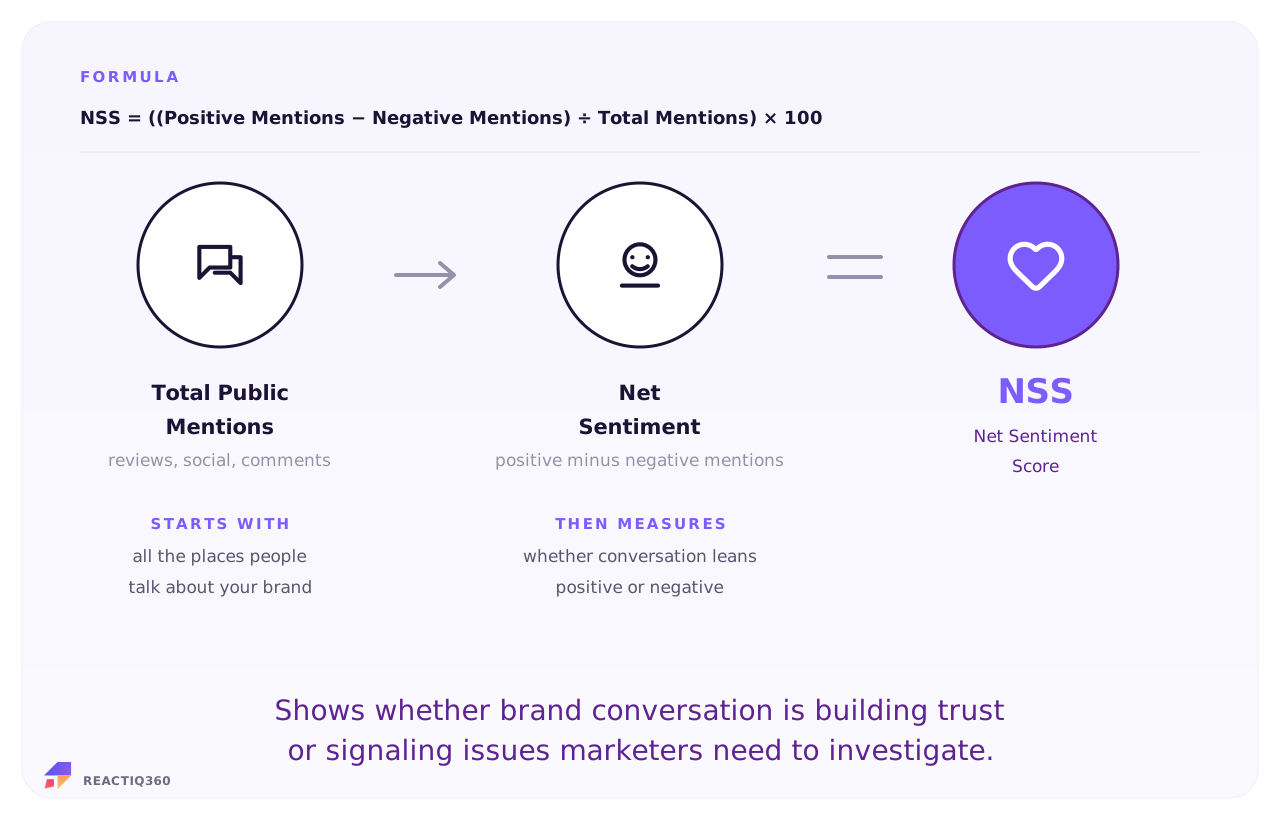
Evaluate your cross-channel brand perception post campaign.
Here is a marketing team reviewing public discussion after a major product redesign campaign. They tally their positive and negative mentions across channels, leave the neutral data aside, and isolate their clear net sentiment performance.
NSS tells you where your brand stands in customer perception. But a "good" score depends entirely on the value threshold you are aiming for. While a basic positive score is a fine milestone for a low-stakes product, a high-trust sector requires a serious commitment to customer care. Tracking this number serves as a brilliant strategic move, showing you exactly how to nurture your community, secure deep customer relationships, and unlock long-term brand value.
You won’t find a flawless Net Sentiment Score sitting inside a standard website dashboard. True NSS requires merging your public mentions across social web scrapers, reviews, and forums with a clean categorization layer that tracks emotional intent. If you trust software automation entirely without checking sample logs, conversational nuances will distort your marketing math.
Here is exactly where each piece of the puzzle lives and what you need to look out for:
NSS is the right metric in these decision contexts:
Tracking brand perception gets messy fast. When measuring NSS, teams usually trip up on these hidden data traps:
Net Sentiment Score sits in the Talk phase, where advocacy has quality, not just volume. Tone turns before retention numbers do, so a sentiment break is your cue to act. By the time churn confirms it, sentiment flagged it a quarter ago.
PSR

NPS
CHL

Sources and methodology. SMT formula and definition derive from standard marketing analytics practice and platform reporting conventions. REACTIQ360 harmonises source data from Social listening and reviews, Classification logic, Harmonisation layer and applies a consistent same-period computation methodology.

One story. One move.


