Organic Reach
Organic Reach (OrgR)
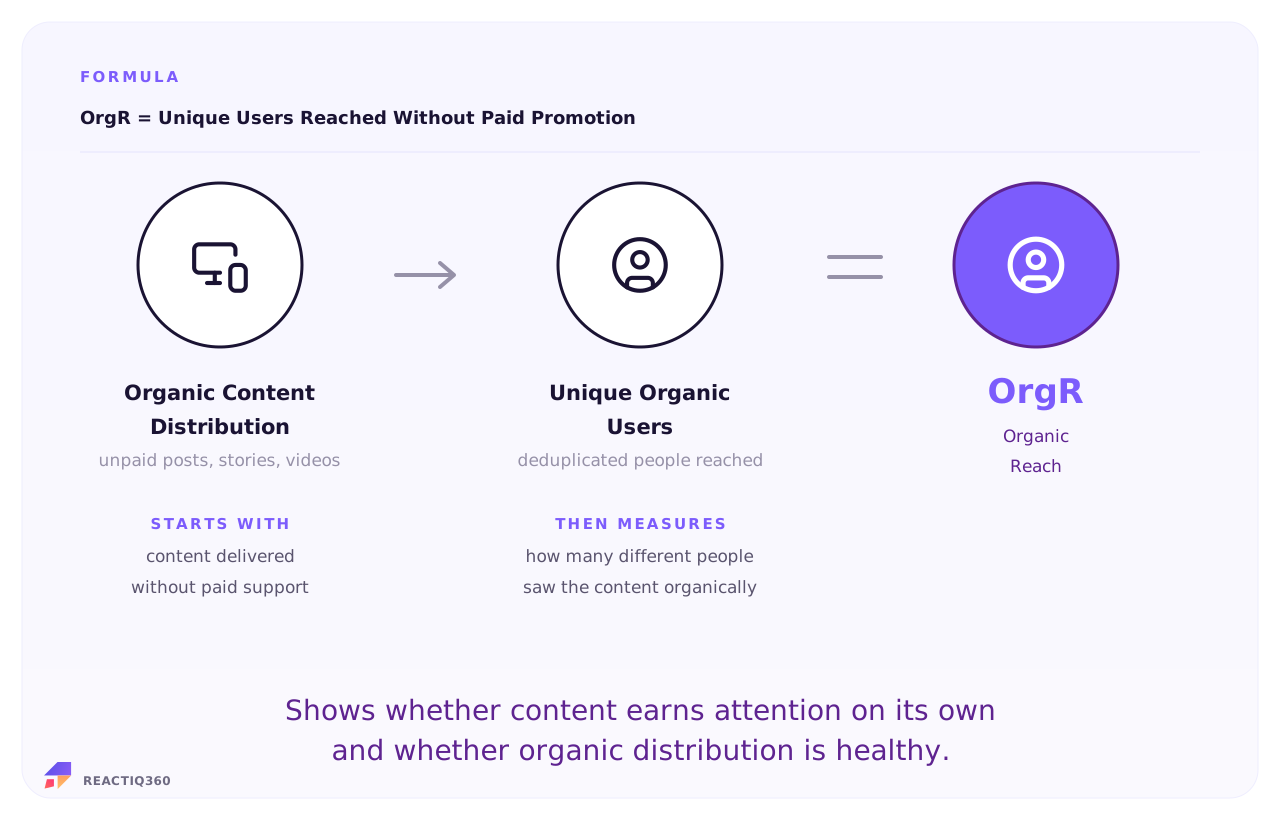
Organic Reach is the number of unique users who see your content naturally without paid advertising.
Organic reach measures the number of unique users who see content without paid promotion, serving as an unvarnished scorecard for content relevance and algorithm health. It proves how effectively content earns audience attention and platform visibility purely on its own merits.
Signal Type
Metric Role
Metric Type
Last Updated
The Formula
Worked example

Track unique profiles to find your real footprint.

Here is a content team evaluating a non-paid video series. They pull the absolute unique profile count from backend dashboards, isolate it from total repeat interactions, and calculate their real earned distribution footprint.

Organic Reach Worked Example
Earned Traffic Clean Data
Total Video Feed Impressions85,000
Repeat User Views (De-duplicated)40,000

Unique User Footprint45,000
45,000
Organic Reach
85,000 impressions minus 40,000 repeats
Isolate unique profiles completely. Stripping away duplicate platform views from your tracking windows guarantees an honest look at your earned organic distribution.
Benchmarks and interpretation

Organic reach shows your true audience size without paid ads.

A good benchmark depends on who you are targeting. Going viral with a funny consumer post is easy, but reaching a tight group of industry professionals takes serious work. Tracking this metric shows you exactly how to build a loyal community and win long-term brand trust.

Platform LayerTypical Reach %Distribution Context
LinkedIn Organic Page2% – 6%Percentage of page followers reached. Heavily driven by text structure and employee comment velocity.
Meta Business Page1% – 3%Page follower reach baseline. Strictly suppressed by platform monetization rules. Requires video format to scale.
Viral Social Channels100%+Calculated well past total subscriber counts. Purely interest graph optimized, relying entirely on early comment watch time hooks.
The algorithm suppression check
Evaluating your organic reach requires analyzing your non-follower traffic mix. A high reach percentage that hits only existing company accounts keeps your communication trapped inside a closed echo chamber. Your non-paid distribution becomes a powerful strategic asset when you weigh your fan volume against the long-term customer relationships and advocacy loops it unlocks.
Where the number actually comes from

Unique reach data comes directly from your social media dashboards and marketing analytics tools. Because tracking individual humans requires secure platform profiles, you must pull this metric straight from platforms like Meta Business Suite, LinkedIn Analytics, or your marketing reporting software.

Organic Reach Bullet List
  • Auditing core content resonance. Tracking unique organic views isolates your creative message strength from paid media push. Use it to find out if your concept genuinely connects.
  • Monitoring network algorithm alignment. Sudden drops in unique viewers flag updates to search engine or feed rules. Use these shifts to quickly adjust your layout tactics.
  • Gauging natural community velocity. Measuring your non-paid unique visibility highlights how well your messaging triggers word of mouth. Use it to locate your most magnetic content angles.
When to use it

Organic Reach belongs in these specific campaign evaluation contexts:

Organic Reach Bullet List
  • Auditing core content resonance. Tracking unique organic views isolates your creative message strength from paid media push. Use it to find out if your concept genuinely connects.
  • Monitoring network algorithm alignment. Sudden drops in unique viewers flag updates to search engine or feed rules. Use these shifts to quickly adjust your layout tactics.
  • Gauging natural community velocity. Measuring your non-paid unique visibility highlights how well your messaging triggers word of mouth. Use it to locate your most magnetic content angles.
Common Mistakes

Evaluating your non-paid distribution comes with tricky algorithmic nuances. Watch out for these typical blind spots:

Organic Reach Mistakes List
  • Confusing unique profile reach with raw impression numbers. One hyperactive follower viewing your graphic ten times logs ten impressions but exactly one unique user in your reach metrics.
  • Blaming your internal creative team for wider network feed declines. Major platforms systematically choke back non-paid traffic to force businesses to buy ads. Separate structural platform trends from actual asset quality.
  • Failing to filter out existing brand advocates from search discovery. If your organic views come entirely from people who already bookmark your site, you are not generating true top of funnel market discovery.
In the REACT framework

Organic Reach is the earned half of the Reach phase. Paid reach measures budget. Organic measures whether content deserves distribution. Grow it deliberately, and never build the forecast on it.

Frequently Asked Questions
What is Organic Reach?
Organic Reach measures how many unique people you reached without paying for the exposure. It measures how far your content travels on merit alone.
How do you calculate Organic Reach?
Use the formula: ORG = Total Count of Unique Unpaid Users Reached. Keep both inputs in the same reporting period and avoid mixing users, sessions, events, or customers unless the formula calls for it.
What data do you need for ORG?
You need published content and unpaid distribution, pulled from the relevant connected sources and computed for the same period.
What mistakes should you avoid with ORG?
Never build forecasts on organic reach, never assume a reach drop means worse content before checking for platform changes, and never compare organic reach across platforms as if the algorithms were fair.
When should marketers use ORG?
Use Organic Reach when judging content resonance and deciding how much distribution risk you carry. Strong organic reach stretches every euro of paid budget further. Weak organic reach means every impression must be bought.
What is a good ORG?
Good is consistency and growth against your own baseline, per platform. Absolute levels are set by algorithms you do not control, so the trend under stable posting is the honest read.

Sources and methodology. OrgR formula and definition derive from standard marketing analytics practice and platform reporting conventions. REACTIQ360 harmonises source data from Ad and platform APIs, Campaign taxonomy, Harmonisation layer and applies a consistent same-period computation methodology.

One screen.
One story. One move.
REACTIQ360 harmonises CAC and 129 other digital marketing metrics into one decision-ready intelligence layer. Powered by proprietary metrics and agentic AI. Beta access is invite-only.
Join the beta waiting list