Cost Per Thousand Impressions
Cost Per Thousand Impressions (CPM)
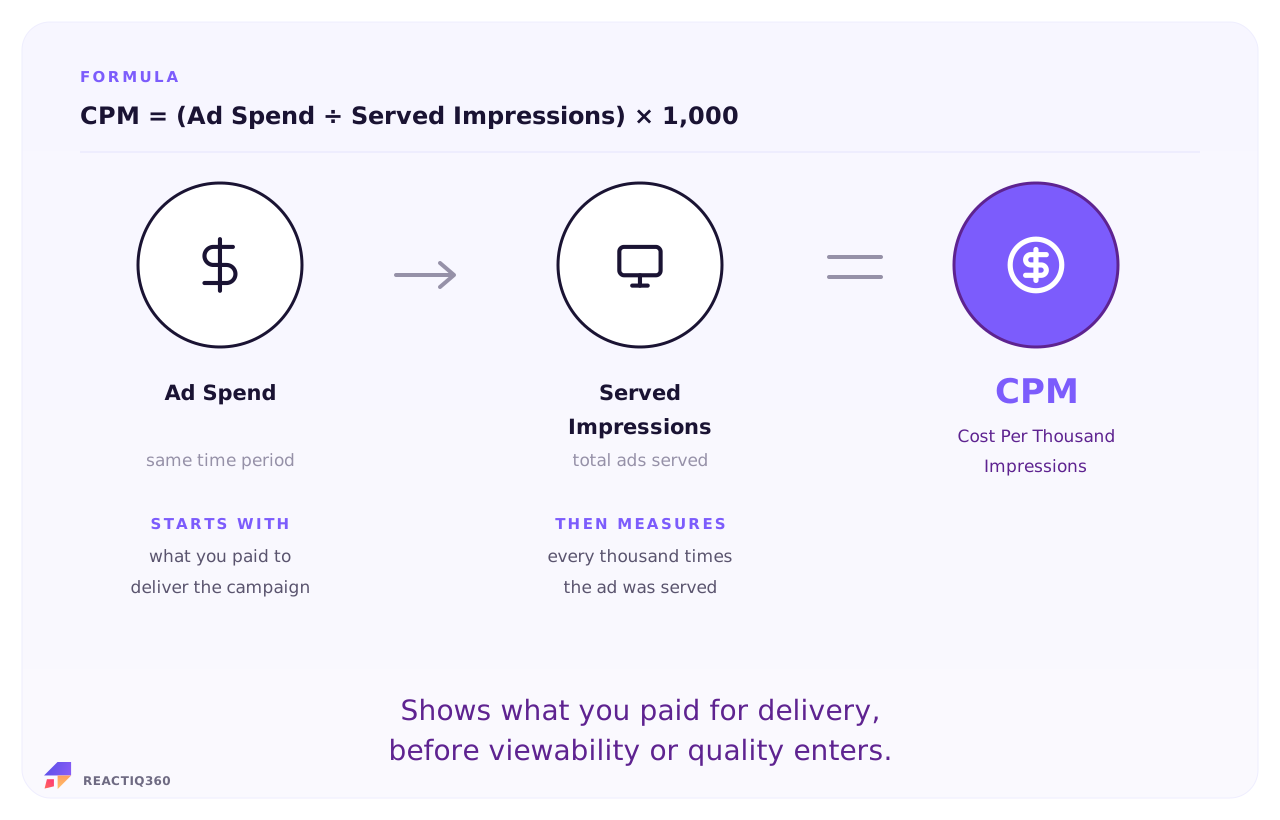
Cost Per Thousand Impressions, or Cost per Mille (CPM), measures what you pay for every thousand times your ad is served.
Divide ad spend by impressions, times 1,000. That is CPM: CPM shows how much you pay to distribute an ad 1,000 times. It helps marketers compare platform costs, plan budgets, and understand the price of creating opportunities for audience reach
Signal Type
Metric Role
Metric Type
Last Updated
The Formula
Worked example

A team compares campaign spend with the number of impressions delivered across each channel to understand the cost of distributing its ads.

CPM Calculator Section
Campaign Media Cost Audit
Total Campaign Ad Spend $15,000

Total Delivered Impressions 1,250,000
$12.00
CPM
($15,000 spend ÷ 1,250,000 impressions) × 1,000
Align your timeline context. Counting the exact invoice outlays against the successful ad delivery records over that specific window keeps your media pricing data realistic.
Benchmarks and interpretation

Pair impressions with platform viewability data or industry benchmarks to estimate how much of your ad delivery is actually seen.

Inventory Channel Typical CPM Range Market Auction Context
Programmatic Open Display $1.50 – $4.00 Mass web footprint options. Highly fluid auction grids that can easily render in standard lower-value footer zones.
Native Ad / Discovery Networks $3.00 – $8.00 Content recommendation configurations. Pricing shifts adapt seamlessly to natural editorial scrolling behaviors.
Premium Social Networks $6.00 – $18.00 Highly targeted feed systems. Costs climb rapidly when targeting specific customer categories or during holiday shopping windows.
Niche B2B Networks (e.g. LinkedIn) $25.00 – $60.00+ Premium corporate audience profiling. Extreme auction density due to narrow decision-maker parameters.
The auction value check
Analyzing your CPM rates serves as an excellent bidding strategy filter. An influx of raw, dirt-cheap ad space blocks can look like an efficiency win on high-level charts, but it actively hides downstream customer quality drops if your click response rates flatline. Organizing your costs by channel type provides a clear strategic advantage, letting you optimize distribution networks to ensure your media spend fuels visible, human campaign opportunities.
Where the number actually comes from

CPM varies across platforms because each advertising ecosystem prices and delivers inventory differently. Calculate it consistently within each platform, then compare Meta, Google, and other channels with those differences in mind.

CPM Data Sources Table
Source What it provides Important nuance
Media platforms Google Ads, Meta Business Hub, LinkedIn The exact invoice spend (numerator) and raw rendered impressions. Dashboards apply automated currency exchanges natively if you run international ads. Always verify that your account billing settings match your local reporting currency to ensure your top-of-funnel pricing calculations remain accurate.
Direct Publishers Direct insertion orders, media contracts Fixed, contractually guaranteed pricing parameters for delivery. Direct premium deals usually bypass background exchange bidding algorithms entirely. Ensure your agreements state exact volume requirements so technical placement delays do not cause surprise end-of-quarter invoice spikes.
When to use it

CPM is the right metric in these decision contexts:

CPM Bullet List
  • Forecasting awareness campaign investments. Multiplying your target impression goals by your historical CPM lets you map out the exact top-of-funnel spend required for broad market announcements.
  • Evaluating publisher inventory value. Comparing CPM rates highlights exactly how different media networks value their screen space, helping you spot price gouging early.
  • Monitoring ad bidding competition. Watch your daily CPM trends during seasonal peaks to track how heavily rival bidders are driving up auction costs in your target segments.
  • Auditing creative message fatigue. Sudden jumps in your CPM can indicate that your target audience has grown tired of your current asset variants, triggering auction penalties.
  • Optimizing premium target profiles. Track CPM pricing shifts when layering on narrow intent criteria to ensure the premium visibility cost matches your conversion goals.
Common Mistakes

CPM can be misleading when platform pricing, ad placement, and delivery quality vary. These are the most common traps to watch for when comparing CPM figures:

CPM Mistakes List
  • Chasing rock-bottom platform rates while ignoring the drop in quality. Securing ultra-cheap ad delivery usually means your banners are loading in low-value, unseen slots that yield zero customer pipeline velocity.
  • Failing to account for unseen ad placements in your calculation. Paying a standard fee for raw server triggers ignores how much money is wasted on elements rendered entirely below the fold or hidden in tiny sidebars.
  • .
    Blending high-value target profiles with loose consumer audience auctions. Merging distinct targeting segments into one global corporate average completely masks the premium pricing required to win your best prospects.
  • Allowing massive bot interaction volume to artificially lower your costs. Fraudulent publisher networks can flood your campaigns with automated ad loads, creating a fake illusion of cheap market reach.
  • Sacrificing narrow audience profiling data just to win massive blocks of impressions. Removing strict intent filters to drop your raw cost ruins your downstream response metrics because the ad serves to random, unengaged users.
In the REACT framework

CPM sits in the Reach phase as a price tag, not a performance metric. It is what you pay to enter the room. It says nothing about who was in the room. Never report it as an achievement.

Frequently Asked Questions
What is Cost Per Thousand Impressions?
Cost Per Thousand Impressions, or CPM, measures what you pay for every thousand times your ad is served. It is a price tag for planning, never a result to celebrate.
How do you calculate Cost Per Thousand Impressions?
Use the formula: CPM = (Ad Spend ÷ Impressions) × 1,000. Keep both inputs in the same reporting period and avoid mixing users, sessions, events, or customers unless the formula calls for it.
What data do you need for CPM?
You need ad spend and served impressions, pulled from the relevant connected sources and computed for the same period.
What mistakes should you avoid with CPM?
Avoid reporting cheap CPMs as wins, comparing CPMs across formats as if impressions were equal, and forgetting that a low price on invisible or irrelevant inventory is money wasted efficiently.
When should marketers use CPM?
Use CPM for planning and negotiating inventory. It answers what volume costs, and nothing else, so keep it out of performance conclusions.
What is a good CPM?
CPMs vary enormously by channel, format, and audience, so good only exists in context. The better question: what does the viewable, qualified version of this inventory cost?

Sources and methodology. CPM formula and definition derive from standard marketing analytics practice and platform reporting conventions. REACTIQ360 harmonises source data from Ad and platform APIs, Campaign taxonomy, Harmonisation layer and applies a consistent same-period computation methodology.

One screen.
One story. One move.
REACTIQ360 harmonises CAC and 129 other digital marketing metrics into one decision-ready intelligence layer. Powered by proprietary metrics and agentic AI. Beta access is invite-only.
Join the beta waiting list